

How to Become an Aged or Disability Care Worker in 2026
Looking for a job where you get to help others every day? Aged and disability care workers support older people and people with disability to live safely and happily. In this simple guide, we'll explain how to start this career, what training might help, and what most employers are actually asking for.
What you'll learn:
- What aged and disability care workers do
- Whether you need a qualification
- How to get started and apply for jobs
- What skills make you great at the role
Want to know whether this career pays good money? Check out our Aged & Disability Care Pay Guide (Australia 2026) where we explore how much aged and disability carers get paid.
What is an Aged or Disability Care Worker?
Aged and disability care workers help people with everyday tasks like getting dressed, eating meals, taking medicine, and staying safe at home. They also help people feel good by chatting with them and keeping them company. You might work in someone's home, in a care facility, or in the community.
You don't just help with physical things — you also make people feel cared for, listened to, and less alone.
Steps to Becoming a Care Worker
1. Understand the Job
Care work is about more than helping with chores. You need to be kind, patient, and willing to listen. You'll help with things like:
- Washing, dressing, and toileting
- Moving around the house safely
- Preparing meals
- Chatting and offering emotional support
- Helping people attend social activities or appointments
2. Do You Need a Qualification?
Legally you do not require a formal qualification to become an aged or disability carer in Australia (Australian Government).
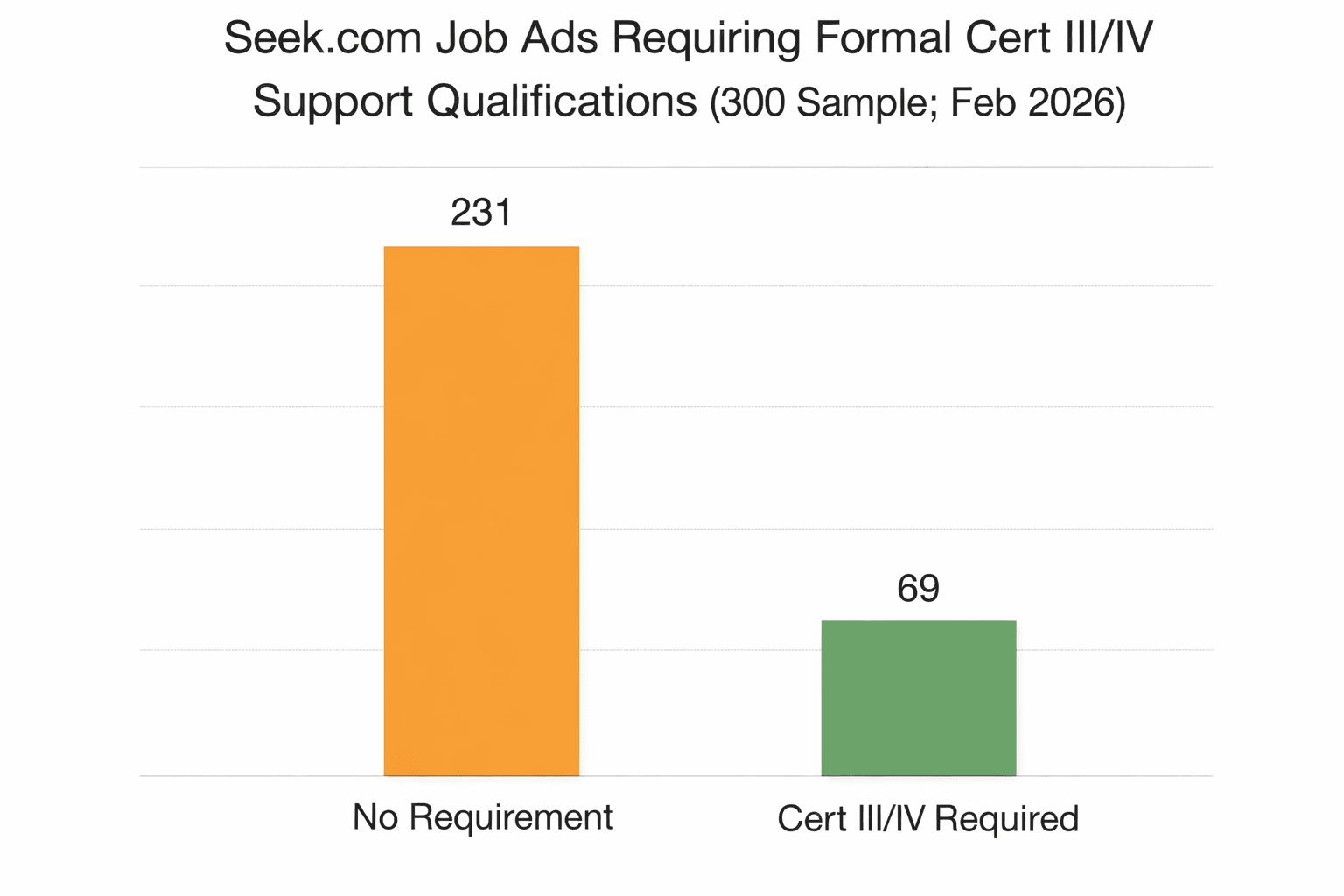
You may also be surprised to learn that the majority of employers do not require a qualification to become a carer in Australia as of February 2026.
Due to the significant demand for support workers in Australia and short supply, most employers are willing to waive the requirement for formal qualifications.
Coursely analysed a random sample of support worker jobs advertised on Seek.com in February 2026 across Brisbane, Melbourne and Sydney. The results show that only 23% asked for a Certificate III or higher. This is down from the 35% when Coursely undertook a similar analysis in July 2025.
An alternative to undertaking formal qualifications is to approach employers directly, such as asking whether they'd consider taking you on for unpaid work experience for a duration to confirm it's a good fit. This can save you the time and resources involved in study.
On the other hand, there's nothing wrong with doing formal qualifications instead. While it may not be a requirement, it can certainly give you the edge in the market: whether that's finding a better employer or hourly rate.
The Australian Bureau of Statistics has also shown that the higher a person's qualification, generally the higher their income as well.
If you do want to do a formal qualification, the Certificate III or Certificate IV in Individual Support (Ageing or Disability) is the most recognised qualification and can help you stand out and get hired faster. This is what will most often be shown in job adverts as highly desirable.
Note: All certificates in Individual Support involve a mandatory work placement — so one way or another, you're going to be getting that valuable hands-on experience.
Individual Support certificates are short (often under a year), offered at TAFEs and private colleges, and often include hands-on training. You can compare prices, subsidies and study mode on the Coursely Certificate III in Individual Support page.
3. Get the Right Checks
Even if you don't study, you'll need some legal checks and health requirements before you start:
- National Police Check — required by virtually all employers in aged and disability care.
- NDIS Worker Screening Check — mandatory if you work with NDIS participants. Replaces the need for a separate police check in most cases when working in the disability sector. See our full guide to the NDIS Worker Screening Check.
- Working with Children Check — required when supporting clients under 18. The name and issuing body differs by state and territory: in Queensland it is called a Blue Card, in Victoria a Working with Children Check (WWCC), in NSW a Working With Children Check, and so on. If you work across borders, you may need more than one.
- First aid certificate — most employers require at minimum a current CPR certificate, and many ask for a full first aid certificate (HLTAID011).
- Immunisations — aged care workers are legally required to have an annual influenza vaccination under the Aged Care Act. Many employers and facilities also require evidence of COVID-19 vaccination, and some request hepatitis B vaccination for workers providing personal care. Check with your employer or facility for their specific requirements before you start.
- Driver's licence — often needed if you visit clients in the community.
Unlike a formal qualification, most of these are minimum requirements to become a carer in Australia — not optional extras.
4. Start Applying
Once you have the basics sorted, it's time to apply! Look for jobs on Seek, ethicaljobs.com.au, or Workforce Australia, or contact local care organisations directly. Write a simple resume that highlights your caring nature, any experience helping others, and if you've done a course or volunteer work.
5. Keep Learning
As you grow in your career, you can take short courses in things like dementia care, palliative care, or mental health. These extras can help you move into better-paid roles or specialist positions.
Pros, Cons, and Things to Know
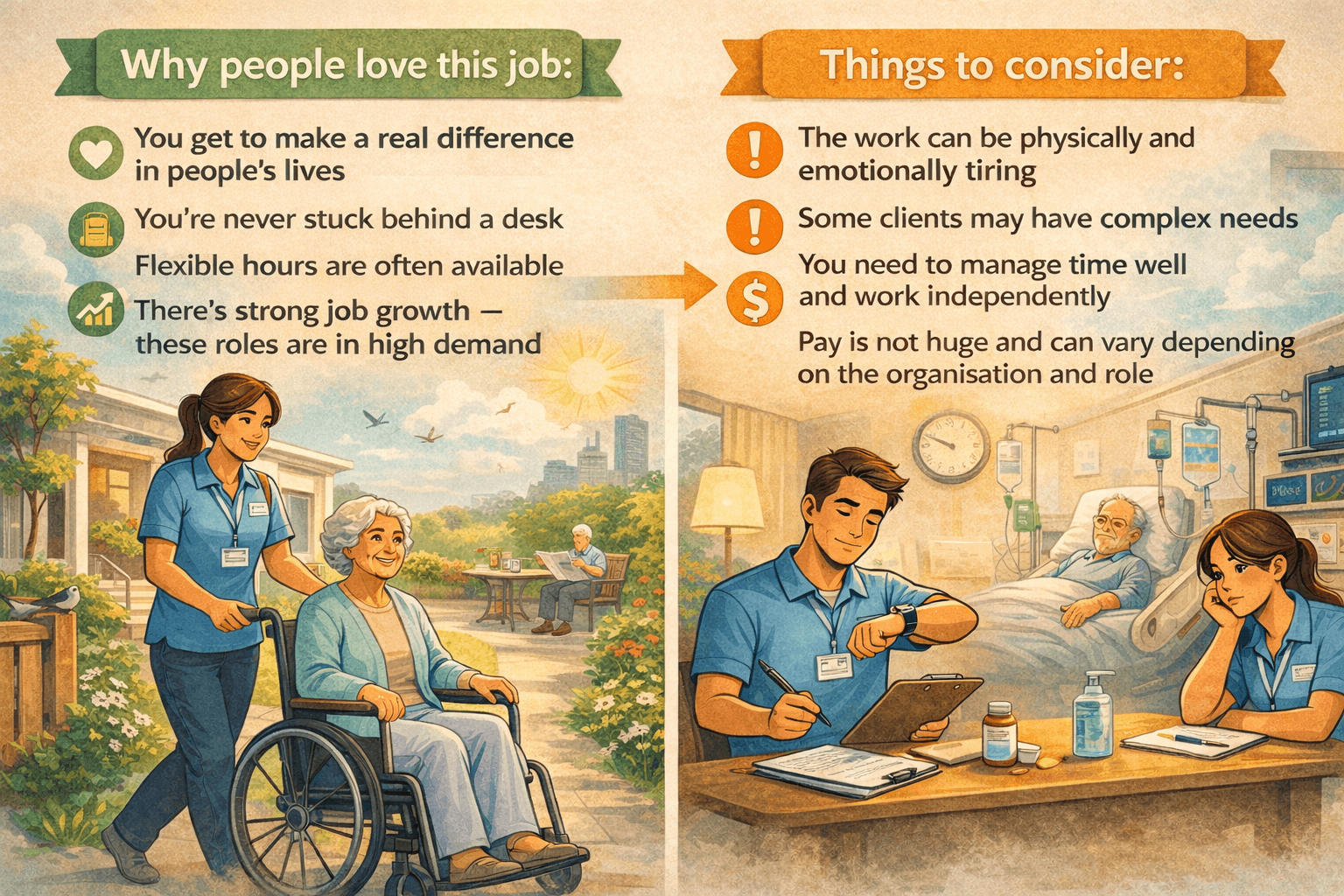
Why people love this job:
- You get to make a real difference in people's lives
- You're never stuck behind a desk
- Flexible hours are often available
- There's strong job growth — these roles are in high demand
Things to consider:
- The work can be physically and emotionally tiring
- Some clients may have complex needs
- You need to manage time well and work independently
- Pay is not huge and can vary depending on the organisation and role (see our guide on How Much You Get Paid: Aged and Disability Care)
Helpful Resources and Next Steps
Want to explore more? Start here:
- Check your eligibility for government funding and subsidies (All States)
- Browse and compare Certificate III courses on Coursely
- Coursely: Aged and Disability Care Pay Guide
- Aged and Disabled Carer – YourCareer.gov.au
FAQs
Do I need a Certificate III to work in aged and disability care?
No, but it helps. From our research, only 23% of job ads mention it as a must-have (February 2026), but having it makes you more competitive.
Are there other, better roles in aged and disability care?
There are several occupations in this field, all offering their own unique advantages and drawbacks. We explore some of these occupations in our Aged and Disability Care Pay Guide.
Is there demand for this job?
Yes — Australia's ageing population means there are more jobs every year in this area. The Australian Government YourCareer website offers great information when it comes to employment outlook.
What does a typical day look like?
You might help someone get dressed, cook lunch, go for a walk, or just chat with them over tea. Every day is different.
Ready to Make a Difference?
Care work is one of the most rewarding careers out there. Whether you want to start now or explore your options first, we're here to help.
👉 Compare Certificate III in Individual Support Courses
We're here to make this easier. Any questions or feedback? Book a free Course Advisor call here.