


Certificate III in Individual Support
Kirana Colleges
$3,327
Full course price
Study onlineStart anytimeStudy for 4 - 12 monthsGovernment accredited: CHC33021

Compare Certificate III in Individual Support courses from registered training providers across Australia. The Ageing specialisation — commonly searched as the "Certificate III in Aged Care" — refers to the elective units you select when enrolling, not a separate qualification. The underlying qualification is CHC33021 regardless of specialisation, takes the same amount of time, sits at the same AQF level, and is treated equally by most employers. The comparison table below shows all providers — and if picking the right specialisation matters to you, a free Coursely advisor can help you find a provider whose elective units align with your goals.
 Takes 1 min
 Check fees and study mode
 Free, no obligation
Step 1
Tell us your preferences
Our quiz identifies the perfect match for you, including study mode, course duration, and government subsidy options.

Step 2
Compare matched courses
See your top matches side by side — real fees, study modes, course duration and study location.

Step 3
Enrol with confidence
Like what you see? Book in with us to answer any remaining questions, confirm suitability and enrol.
42 courses matched — showing 22–28, sorted by lowest price
Certificate III in Individual Support
Kirana Colleges
Certificate III in Individual Support
ACE Community Colleges (NSW)
Certificate III in Individual Support
Aged Care Training Services
Certificate III in Individual Support
Certificate III in Individual Support
Southern Cross Education Institute
Certificate III in Individual Support
KCA Education
Certificate III in Individual Support
ACE Community Colleges (QLD)
The Certificate III in Individual Support (CHC33021) with an Ageing specialisation is a qualification that may be preferred if your interest is specific to aged care. The Ageing specialisation means your elective units are drawn from aged care-specific content, preparing you for roles in residential facilities, home and community care, and respite services.
The qualification is delivered by registered training organisations (RTOs) and typically takes between 6 and 12 months. All students must complete a minimum of 120 hours of work placement in a real aged care setting before graduating.
Aged care is not one job — it's a range of roles across distinct settings, and the day-to-day experience varies significantly depending on where you work.
Residential aged care involves working in a facility where older people live full-time. This is structured, shift-based work — mornings, afternoons, and nights — and covers personal care (showering, dressing, grooming), meal assistance, mobility support, and social engagement. You will work with people living with dementia, chronic health conditions, and palliative care needs. The work is physically and emotionally demanding and genuinely skilled. Residential care facilities are operated by government, private, and not-for-profit organisations — the culture, staffing ratios, and working conditions vary considerably between operators, so it is worth researching specific employers before committing to placement or employment.
Home and community care involves visiting clients in their own homes to provide support with daily tasks — cleaning, cooking, personal care, and social connection. Work is less structured than residential care, more autonomous, and often involves significant driving between clients. The workforce is large and growing rapidly as the Australian Government's Support at Home program, which commenced in July 2025, shifts more funding toward keeping older Australians in their homes rather than entering residential care. Home care is particularly strong for workers who prefer variety and independence over a fixed facility environment. For a wider view of pathways into the sector, see our guide on how to become an aged or disability care worker.
Respite care involves providing temporary care to give primary carers — usually family members — a break. This can be in-home or in a respite facility, and the duration can range from a few hours to several weeks. Respite roles require strong interpersonal skills and adaptability, as you are often working with people in unfamiliar or heightened-stress circumstances.
The Certificate III in Individual Support requires 15 units: 9 core units completed by all students regardless of specialisation, and 6 elective units that vary by specialisation. The specialisation is determined by which elective units your RTO includes in their programme — it does not change the qualification code, the duration, or the AQF level. Official packaging is published on training.gov.au — CHC33021. If choosing the right elective units matters to you, a free Coursely advisor can help you identify a provider whose Ageing stream aligns with the roles you're aiming for.
Core units cover foundational skills applicable across all care settings: communication, working with diverse people, following safe work practices, infection control, and providing individualised support according to a care plan.
For the Ageing specialisation, three mandatory elective units are set by the qualification's packaging rules. These are:
This unit is one of the most practically significant in the entire qualification. Dementia affects approximately half of all people in residential aged care, and working confidently with people living with dementia is a core skill for any aged care worker. The unit covers what dementia is — including the different types such as Alzheimer's disease, vascular dementia, and Lewy body dementia — and how each affects a person's cognition, behaviour, and communication. You will learn person-centred approaches to dementia care, including how to communicate effectively when verbal communication becomes difficult, how to support orientation and daily routines, and how to recognise and respond to behavioural and psychological symptoms of dementia (BPSD) such as agitation, wandering, and sundowning. Crucially, the unit focuses on maintaining the dignity and personhood of someone living with dementia — a values-based approach that shapes how good aged care workers carry themselves throughout their careers.
This unit provides the contextual and legal framework for aged care work. It covers the aged care system in Australia — including the role of the Australian Government in funding and regulating residential and home care, the Aged Care Act, and the Aged Care Quality Standards that providers are required to meet. You will learn about the rights of people receiving aged care, including the right to make decisions about their own care, the right to be free from abuse and neglect, and the obligations workers have to report concerns. The unit also covers how to navigate the documentation and reporting requirements that come with working within a regulated care environment — care plans, incident reports, and handover processes. For workers new to the sector, this unit is often the one that most clarifies what professional conduct looks like in practice.
Palliative care is an area many people entering aged care feel unprepared for, and this unit addresses that directly. A palliative approach does not mean someone is actively dying — it means care is oriented toward comfort, quality of life, and dignity for a person with a life-limiting illness, which can span months or years. The unit covers the principles of palliative care and how they apply in aged care settings, the physical signs of deterioration and how to respond, how to communicate sensitively with people and their families during this time, and what the worker's role is within the broader palliative care team. It also addresses the emotional dimensions of this work — grief, loss, and how workers can look after themselves when supporting someone at the end of life. Workers who complete this unit are meaningfully better prepared for one of the most challenging and important aspects of aged care work.
The remaining three elective units are selected from a broader pool and vary by RTO. They may cover areas such as home care services, medication assistance, supporting people from culturally diverse backgrounds, or supporting people with specific health conditions. Always check the full elective unit list with your chosen provider before enrolling — and see our checklist for picking the right training provider if you're comparing options.
Australia's aged care workforce is in a structural period of reform and growth simultaneously. Several factors are shaping what working in the sector looks like in 2025 and beyond.
Pay has improved significantly. Following a Fair Work Commission decision, aged care workers received a 15 percent pay increase in 2023 — the largest sector-wide pay rise in the industry's history. Entry-level workers under the Social, Community, Home Care and Disability Services (SCHADS) Industry Award are now typically paid between $27 and $30 per hour depending on their classification level, penalty rates, and state. This has made aged care a more competitive employment option compared with retail and hospitality roles at a similar qualification level. For more detail, read our aged and disability care pay guide.
The Strengthened Aged Care Quality Standards, which took effect in August 2024, place greater emphasis on the skills and conduct of frontline workers. Employers are increasingly looking for workers who can demonstrate person-centred practice, not just complete tasks. This matters for how you approach your training and placement — employers notice.
Workforce demand is sustained. The aged care sector requires approximately 35,000 additional workers per year to keep pace with Australia's ageing population. Vacancy rates remain elevated in both residential and home care. For people entering the workforce, this means the qualification has strong employment utility — particularly in regional and rural areas where shortages are acute.
The Cert III is the starting point, not the ceiling. Common progression pathways include:
Changing careers into care? Our Cert III guide for career changers walks through timelines and how long the qualification usually takes.
The Ageing specialisation attracts the same government subsidy eligibility as the broader Cert III in Individual Support. Most states and territories offer funded places for eligible students — in some cases reducing the cost to zero. Eligibility depends on your state of residence, prior qualifications, and current enrolment status. Use the eligibility checker in our subsidy guide or speak to a free Coursely advisor to confirm before committing to a provider. For typical course costs, see our Certificate III cost guide.
Why Us

No pesky spam — we never pass on your details without your consent

We are the most comprehensive, up-to-date course marketplace

No hidden fees or charges. Free and fast advice
“I'd been Googling care courses for weeks and getting nowhere. Coursely showed me the options side by side in minutes — I enrolled that afternoon.”

Jess
Aged care student, NSW
“I didn't realise there were subsidised options available in my state. The advisor saved me over $300 on the course I ended up doing.”

Karen
Career changer, VIC
“The course advisor was genuinely helpful and didn't try to push me toward anything. I felt like I was getting honest advice for once.”

Tom
Disability support worker, QLD
Yes. "Certificate III in Aged Care" is the colloquial name most Australians use when searching for this qualification. The official qualification is CHC33021 Certificate III in Individual Support, with an Ageing specialisation selecting the elective units relevant to aged care roles. There is no separate "Certificate III in Aged Care" qualification currently on the national register — they are the same thing.
This is really up to you. Some students just want the cheapest course, the fastest. Some want a reputable brand, some want flexibility to study while they work.
The smartest way to decide is to complete the Age and Disability Care Quiz and then speak to a course advisor for free — they'll walk you through your subsidy eligibility as well.
Alternatively use the Coursely comparison tool to get an impression of what course you might like, then use the same quiz to see if it actually suits your preferences!
Yes. All courses listed on Coursely are the Certificate III in Individual Support (CHC33021), accredited with the Australian Skills Quality Authority (ASQA). The RTO code for each provider can be found on training.gov.au.
There are so many factors that go into price, including work placement support, the size of the training provider, whether they are online only or on campus.
Importantly, all providers listed are government accredited, and you become qualified on successful completion regardless of the price you pay for it.
Courses are delivered online, on-campus, or as blended learning. Many providers also offer workplace-based traineeships.
Certificate III courses require a mandatory work placement which will involve going into a real workplace for at least 120 hours. Some providers offer to organise this for you while others require you to organise this yourself. Worth checking before signing up.
The Certificate III in Individual Support requires a mandatory work placement which will involve going into a real workplace for at least 120 hours. This is usually unpaid.
Some providers offer to organise this for you while others require you to organise this yourself. You can indicate what kind of assistance you would like in the course quiz.
If you are working in the industry, you often can use your existing employer for the work placement, and this will also mean the work placement can be paid. Training providers must be willing to use existing employers, and not all do. This is worth discussing with your course advisor after you complete the quiz. For more, see our work placement article.
Usually the fastest you can complete the course is 3 months, and this is an intensive training program. Most students take closer to 6 - 12 months. Coursely can assist you in identifying fast providers. If this is important to you, you can indicate your desire to finish quickly in the quiz.
Note: Coursely is not aware of any accredited training providers who can deliver the course in less than 3 months.
Most states and territories offer funding schemes for Certificate III courses. Your eligibility will often depend on your location, age, prior qualifications, and employment status. Once you complete the quiz, a course advisor can provide you advice on your subsidy eligibility. Alternatively, you can check out our subsidy eligibility guide.
You can usually complete the Certificate III in Individual Support on a visa, though it is important to be aware of any visa restrictions that apply to you before proceeding. You can check your visa restrictions online for free by going to VEVO. Common restrictions include that you must complete the course regionally, or within 4 months. Coursely can help you find options that meet your visa requirements.
Note: Student 500 visa holders have specific visa restrictions that apply. Students should complete the quiz to see whether Coursely can assist them.
Yes. With Australia's ageing population and growing NDIS sector, there is strong demand for qualified care workers in both aged care and disability support. Check out the YourCareer page for more helpful information.
No. There are more than 400 providers offering the Certificate III in Individual Support, and even more unaccredited options.
We have listed as many accredited options as we can for you, noting the time and resources involved in keeping the information up to date. For a full list of Certificate III options you can go to training.gov.au or YourCareer, but these will not include information like pricing, duration or mode of study.

Should I do the Cert III or the Cert IV in Ageing and Disability?
Is my provider actually accredited by the government, and do I get a refund if the provider closes?
NDIS Worker Screening Check — What Support Workers Need to Know

Certificate III in Individual Support: What Career Changers Actually Need to Know

Certificate III in Individual Support: A Straight-Talking Guide for Existing Support Workers

How Long Does Certificate III in Individual Support Take?

Online vs On-Campus Certificate III in Individual Support: What Actually Changes (and What Doesn't)

Work Placement in Certificate III Individual Support: What the 120 Hours Means and How to Plan It

Cheapest Certificate III in Individual Support Courses in Australia

Cert III Individual Support Cost: From $899, or $0 With a Government Subsidy

Aged Care Worker Salary Australia 2026 — What Each Role Actually Pays

How to Become an Aged or Disability Care Worker in 2026

Picking the Right VET Provider: Complete Checklist 2026
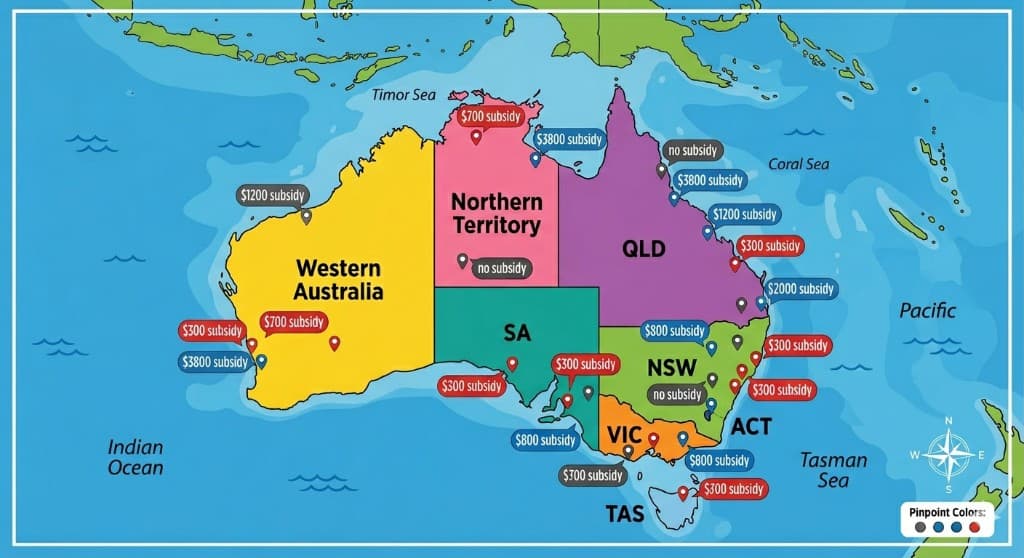
VET Government Subsidy Calculator (NSW/QLD/VIC/WA/SA/ACT/TAS) 2026
Coursely is currently in beta — we're working hard to make this the best course comparison experience in Australia. If you spot anything or have feedback, we'd love to hear from you. Share feedback →